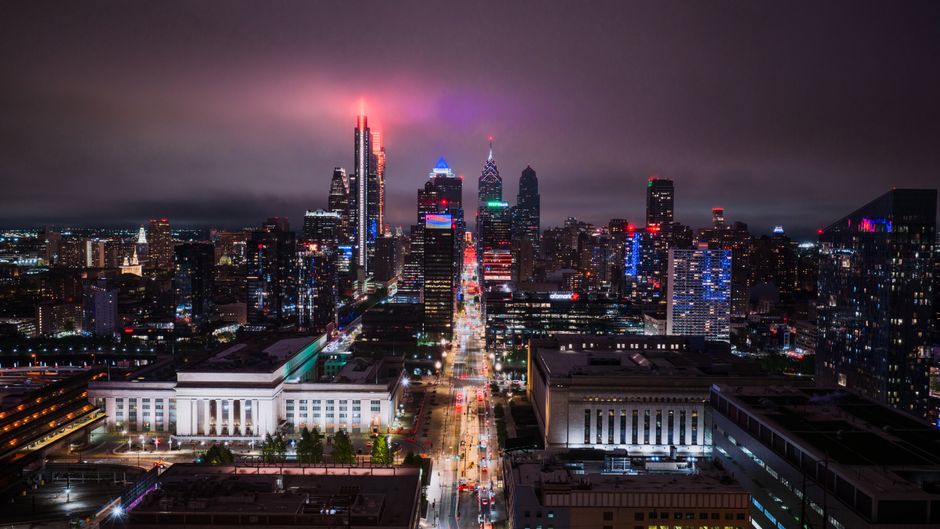
Philadelphia's municipal archives and several of its major cultural repositories are sitting on tens of thousands of duplicate, mislabeled, or redundant photographs that have accumulated over decades of digitization drives, and the question of what to do with them is no longer a housekeeping problem—it's a policy problem with real budget consequences.
The issue has sharpened this summer because a number of digitization grant cycles tied to state and federal cultural preservation funding are set to close or renew in the fall of 2026. Institutions that fail to demonstrate clean, deduplicated collections risk losing access to future rounds of money. For a city with Philadelphia's depth of visual history—from the construction of I-95 through South Philly to the block-by-block demolition of neighborhoods around what is now Citizens Bank Park—the stakes of getting this wrong are considerable.
What's Piling Up, and Where
The Philadelphia City Archives, located on Broad Street near City Hall, holds photographic records stretching back to the late nineteenth century. Staff there have identified duplicate image sets as a persistent problem, particularly in collections digitized before standardized metadata protocols were widely adopted—roughly anything processed before 2010. The Free Library of Philadelphia's Print and Picture Collection, one of the largest municipal visual archives in the northeastern United States, faces a similar challenge: multiple scans of the same physical image, often at different resolutions, filed under inconsistent subject headings.
The Temple University Libraries Special Collections in North Philadelphia and the Historical Society of Pennsylvania on Locust Street have each undertaken partial deduplication reviews in recent years, but neither has completed a full audit. The sheer volume is part of the problem. A single mid-century urban renewal project—say, the clearance of the old Eastwick neighborhood in Southwest Philadelphia during the 1950s and 1960s—can generate hundreds of near-identical survey photographs, many of which were scanned multiple times as collections changed hands.
Deduplication software has improved markedly. Several platforms now use perceptual hashing, which identifies visually similar images even when file names differ, a significant upgrade over older checksum-based tools that only caught exact byte-for-byte copies. Licensing costs for enterprise-level tools of this kind can run from roughly $15,000 to $60,000 annually depending on collection size, according to published pricing from vendors active in the archival sector.
The Decisions That Can't Wait
Three questions are now sitting on the desks of collections managers across the city. First: which images get kept when duplicates conflict? A higher-resolution scan of a degraded original is not the same as a faithful duplicate, and destroying it could mean permanently losing detail. Second: who owns the deduplication decision when a photograph exists in multiple institutions simultaneously? A 1964 shot of the Benjamin Franklin Parkway under construction might live in both the Free Library and the City Archives, and both may have legitimate custodial claims. Third: what happens to the metadata attached to images that are merged or retired? Catalog records built over years by trained archivists can't simply be discarded.
The Philadelphia Cultural Fund, which administers local arts and preservation grants, has acknowledged that digital stewardship capacity is a priority area for its current funding cycle, though specific allocations for deduplication work have not been publicly detailed. The Pennsylvania State Historic Preservation Office has a September 30, 2026 deadline for certain digitization compliance reports from grant recipients.
For community groups and researchers who rely on these collections—neighborhood historians in Germantown, journalists pulling images of Kensington from twenty years ago, urban planners reviewing the visual record of development along the Delaware waterfront—the practical impact of inaction is straightforward: searches return cluttered results, the most useful image may be buried under a dozen near-copies, and confidence in the archive erodes.
The next sixty days will likely determine whether institutions move toward a coordinated citywide deduplication protocol or continue handling the problem piecemeal. A joint working group involving the City Archives and the Free Library has been discussed informally for over a year. Whether it convenes before the fall grant deadlines may be the single most consequential decision Philadelphia's archival community makes in 2026.