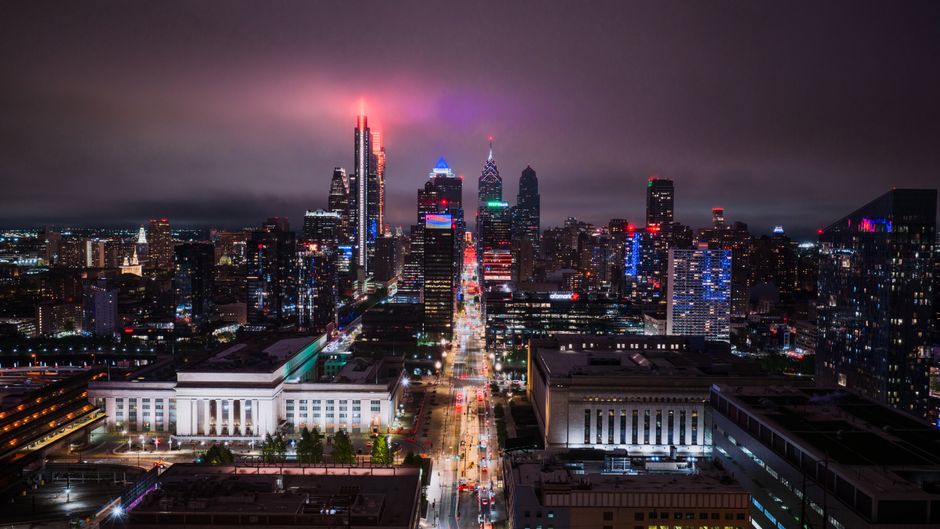
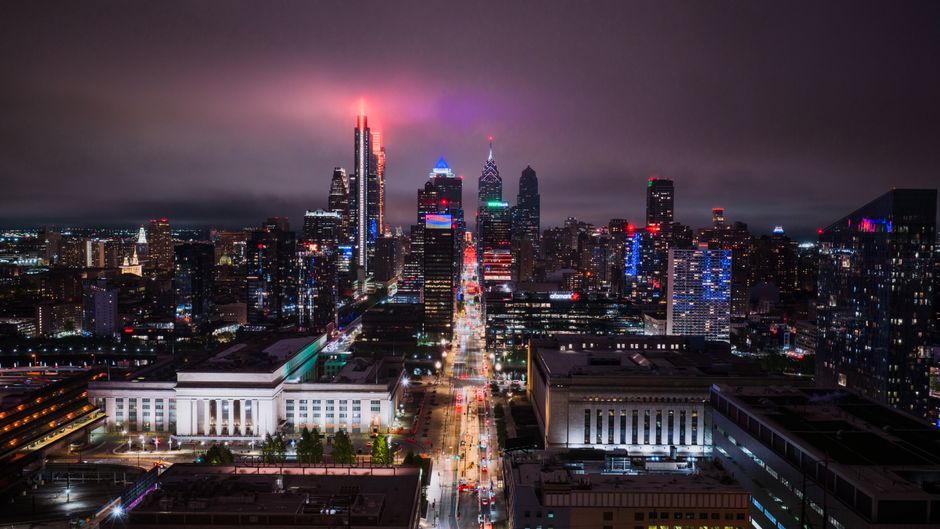
Philadelphia's Office of Arts, Culture and the Creative Economy has spent the better part of the last 18 months trying to solve a problem that sounds almost too mundane to be urgent: duplicate images covering the same walls, poles, and public surfaces across the city, often printed or pasted in batches that swamp original artwork and devalue the streetscape. On Independence Mall's eastern corridor and along Kensington Avenue, the effect is particularly stark — the same three or four low-resolution graphics plastered over one another, burying sanctioned murals underneath layers of cheap repeated prints.
The timing matters. Cities globally are confronting this at once, partly because affordable wide-format digital printing has dropped the cost of producing hundreds of identical posters to near zero, and partly because the post-pandemic surge in guerrilla marketing has never fully receded. What was a manageable nuisance in 2019 is now a budget and planning headache from Brixton to Busan.
What Philadelphia Is Actually Doing
The city's primary tool remains the Mural Arts Philadelphia program, which has operated since 1984 and maintains roughly 4,000 sanctioned murals across neighborhoods from Fishtown to West Philadelphia. The program works with property owners to designate walls as protected surfaces, making unauthorized duplication — including repeated paste-ups — subject to city code enforcement under Philadelphia's anti-graffiti ordinance, Chapter 10-700 of the Philadelphia Code.
Since January 2025, the Streets Department's Clean Neighborhoods program has logged duplicate image removal as a distinct category in its maintenance tracking, separating it from standard graffiti removal. That distinction matters operationally: duplicate image clusters require different solvents and surface prep than spray paint, and the per-incident cost runs higher. The city has not publicly released a per-incident figure for the current fiscal year, but the Streets Department's 2025 budget included a line item of approximately $2.3 million for graffiti and unauthorized posting abatement citywide — a figure confirmed in documents posted to the City Controller's public database.
Mural Arts Philadelphia also launched a pilot in the Germantown Avenue corridor in the spring of 2025, working with building owners to install a QR-code registry system that lets inspectors quickly verify whether a posted image is sanctioned. The system flags repeats automatically when the same image ID appears at more than one registered location without approval.
How Other Cities Are Handling the Same Problem
London's approach, managed partly through Transport for London and partly through individual borough councils, has leaned heavily on rapid-response removal contracts. Lambeth and Hackney councils each moved in 2024 to consolidate removal contracts under single vendors, cutting average response time from 11 days to under 72 hours for reported clusters. The tradeoff is cost: borough-level spending on duplicate image and flyposting removal in those two boroughs alone reached roughly £1.4 million in the 2024-25 fiscal year, according to publicly available borough budget reports.
Seoul's Jung-gu district took a different route, deploying AI-assisted camera monitoring along Cheonggyecheon Stream's commercial corridor beginning in late 2024. The system flags repeated imagery in real time and routes alerts to a dedicated street management team. Early reporting from the Seoul Metropolitan Government described a reduction in repeat posting incidents, though independent verification of those figures has not been published.
São Paulo, which banned all outdoor advertising — including murals — under Lei Cidade Limpa in 2007, operates at the far end of the enforcement spectrum. The law eliminated the duplicate image problem by eliminating most commercial imagery from public surfaces entirely. Critics argue it also stripped the city of legitimate street art culture, a tradeoff Philadelphia's arts community has explicitly rejected.
Philadelphia's hybrid model — protecting sanctioned art while enforcing against repetitive unauthorized posting — is closer to what Amsterdam and Lisbon have tried, with varying success, in their historic districts.
For residents dealing with the problem now, the city's 311 service accepts duplicate image and flyposting complaints online and by phone, and the Streets Department has committed to a 5-business-day response target for clustered incidents reported in the current fiscal year. Property owners on designated Mural Arts corridors can apply through the Mural Arts Philadelphia office at 1727-29 Mount Vernon Street to have their walls formally registered, which adds a layer of legal protection and typically accelerates the city's removal response when unauthorized duplicates appear.