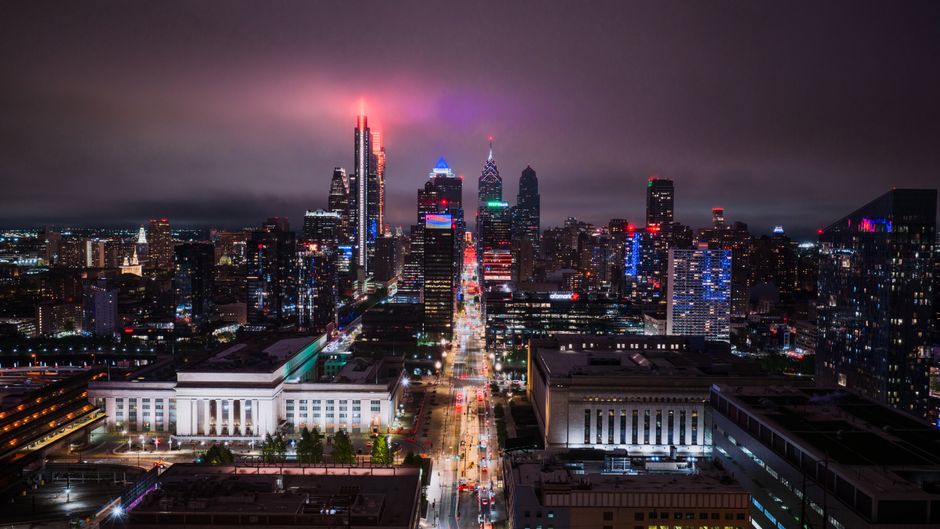
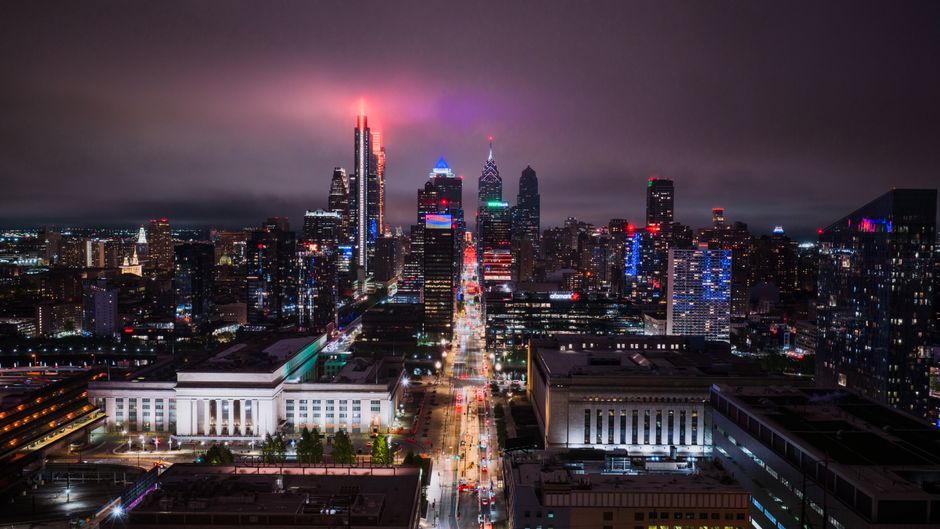
Philadelphia's public-facing digital infrastructure has a visibility problem. Across the city's official government website, phila.gov, duplicate and recycled images appear on department pages, community program listings, and neighborhood development portals — sometimes showing the same generic stock photograph of a community meeting or construction site repeated dozens of times across entirely unrelated pages. The effect is subtle but corrosive: residents trying to navigate city services increasingly cannot tell whether what they're looking at is current, relevant, or simply filler.
This is not a cosmetic complaint. When the Office of Community Empowerment and Opportunity posts a photo of a Kensington Avenue street scene that was taken in 2019 alongside a 2026 grant application, applicants cannot confirm whether the programs described still serve that corridor. When the Philadelphia City Planning Commission recycles the same aerial photograph of Center City across three separate neighborhood planning documents — covering areas as distinct as Germantown and Point Breeze — it signals, at minimum, a resource gap that shapes how seriously those communities take the engagement process.
Why Duplicate Imagery Erodes Community Trust
The problem matters now for a specific reason. Philadelphia is in the middle of a $1.2 billion capital budget cycle for fiscal year 2026, and dozens of community organizations across the city are competing for infrastructure, housing, and public-space dollars through processes that depend heavily on digital documentation and public-facing transparency. Groups in neighborhoods like Strawberry Mansion and Frankford rely on city web pages to confirm program eligibility, understand timelines, and verify that services described are actually operating.
When those pages feature images that clearly do not match the described content — a photograph of a suburban cul-de-sac on a page about row-home rehabilitation grants in North Philadelphia, for instance — residents are left guessing. That guessing erodes participation. Lower participation in public comment periods and grant processes directly affects how federal and state matching dollars get allocated, since many funding formulas reward demonstrated community engagement.
The Free Library of Philadelphia's Digital Literacy Program, which operates out of branches including the Lillian Marrero Library on West Lehigh Avenue, has made visual verification one of its core modules in 2026 precisely because of this confusion. Instructors there teach residents to cross-check city web content against the Philadelphia Open Data portal and official press releases — a workaround that should not be necessary if official platforms maintained accurate, unique imagery in the first place.
What the Fix Looks Like — and Who's Responsible
The Philadelphia Office of Innovation and Technology, which manages the city's digital platforms, has the authority to implement image auditing protocols. A proper duplicate-image replacement process involves assigning unique, georeferenced photographs to each department page, removing stock imagery that cannot be traced to an actual Philadelphia location or program, and establishing an annual review cycle. Several mid-sized American cities, including Pittsburgh and Baltimore, have adopted open-source content management plugins that flag duplicate media assets before they go live.
The cost of doing this is not prohibitive. Open-source tools like Apache Tika, used for content metadata analysis, are free to deploy. A contracted digital audit of phila.gov — which hosts more than 4,000 individual pages as of early 2026 — typically runs between $40,000 and $80,000 depending on scope, according to publicly available government IT procurement benchmarks. That figure is a fraction of the $3.1 million the city spent on its last major website redesign in 2022.
Community organizations in South Philadelphia and West Philadelphia that work regularly with city planning departments say the mismatch between imagery and content has come up repeatedly in resident feedback sessions — though getting those complaints formally logged through the city's 311 system remains inconsistent.
Residents who want to flag specific instances of misleading or duplicated imagery on phila.gov can file a content correction request through the city's 311 portal or contact the Office of Innovation and Technology directly at the Municipal Services Building on John F. Kennedy Boulevard. For those navigating grant applications or planning documents, cross-referencing with the Philadelphia Open Data portal at opendataphilly.org provides the most reliable independent check on whether a listed program or project is current. The fix, ultimately, belongs to the city — but residents documenting the problem are the fastest way to force it up the priority list.