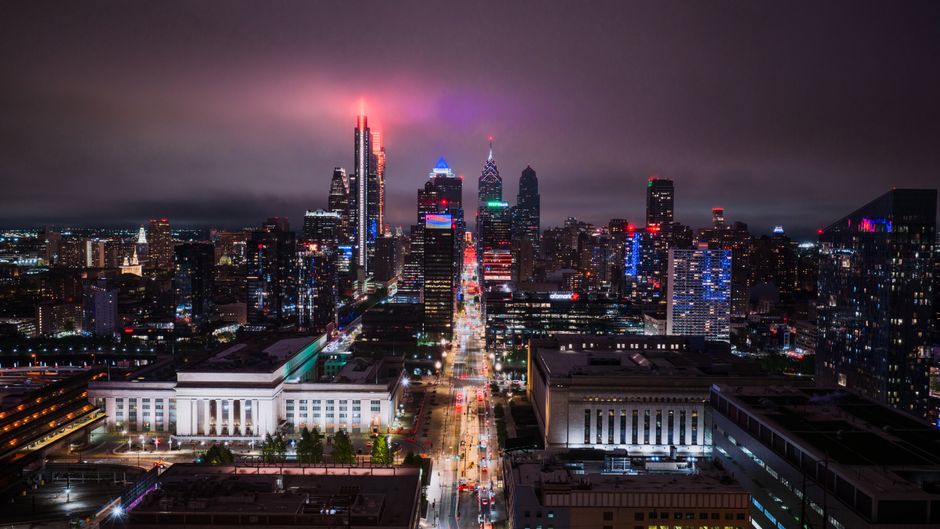
Philadelphia has thousands of them: duplicate street name signs planted on the same pole, two identical wayfinding plaques bolted to opposite sides of the same lamppost, and layers of city-issued imagery — murals, historic markers, transit decals — that overlap or outright contradict each other. The Streets Department confirmed an ongoing audit earlier this year, but residents in neighborhoods like Kensington and Fishtown say the cleanup has been uneven at best.
The issue matters now for a specific reason. The city's Office of Transportation, Infrastructure and Sustainability, known as OTIS, is in the middle of a $14 million streetscape modernization push that runs through the end of fiscal year 2027. Redundant or duplicated physical signage and imagery — what planners call "duplicate image" clutter — drives up installation and maintenance costs, confuses pedestrians and cyclists, and creates accessibility problems for people relying on screen-reader apps linked to city mapping databases. When the same intersection has two different QR-coded sign plates pointing to different versions of the same city web page, the downstream confusion is real and measurable.
What Philadelphia Is Actually Doing
The Streets Department has been coordinating with the Philadelphia City Planning Commission since late 2024 to cross-reference its physical signage inventory against the city's GIS database. The goal is to flag instances where duplicate images — whether physical signs or digital assets tied to city landmarks — are pulling resources without adding information value. The work is concentrated right now along the Spring Garden Street corridor and sections of Broad Street between City Hall and South Philadelphia, two of the city's highest-traffic surface routes.
The Free Library of Philadelphia's Map Collection, housed at the Parkway Central branch on Vine Street, has also been looped into a parallel digital project: digitizing and deduplicating historical city imagery held in its archives, some of which dates to the 1880s. Librarians there have been working with Temple University's Loretta C. Duckworth Scholars Studio to identify and consolidate duplicate photographic records of Philadelphia landmarks. The project, which launched in January 2025, had processed roughly 11,000 image records by spring of this year, according to materials published by the library.
How Philadelphia Stacks Up Against Comparable Cities
Amsterdam completed a citywide wayfinding sign audit in 2023, removing more than 3,400 duplicate or redundant panels across its canal district and outer boroughs as part of a broader public space quality program. Chicago's Department of Transportation finished a similar review of its Loop and Near North Side signage in 2024, cutting installation backlogs by an estimated 18 percent after eliminating duplicate pole attachments. Philadelphia, by comparison, has not published a completion target or a formal reduction benchmark for its current effort, making it harder to assess progress against peer cities.
That gap in public accountability is not trivial. Transportation planners in cities like Rotterdam and Montreal have made the case — backed by post-audit data — that streamlining duplicate visual infrastructure reduces municipal maintenance costs by between 8 and 12 percent annually on high-traffic corridors. Philadelphia's OTIS has not released equivalent figures for its own streetscape program, though the $14 million budget covers a range of improvements beyond sign consolidation alone.
For residents and small business owners along corridors like East Passyunk Avenue or the 52nd Street commercial strip in West Philadelphia, the practical stakes are immediate. Duplicate signage has contributed to incorrect map data in apps like Google Maps and Apple Maps, occasionally routing delivery drivers to wrong addresses or listing businesses under two different pins for the same location.
The Streets Department is expected to release an updated inventory report later this summer. Residents can flag duplicate or contradictory signage through the city's 311 portal, which routes complaints to the department's sign shop on Byberry Road in the Far Northeast. If the OTIS timeline holds, the most heavily impacted corridors should see visible consolidation by the second quarter of 2027 — though whether that schedule survives the city's budget pressures heading into the next fiscal year is an open question the administration has not yet answered publicly.