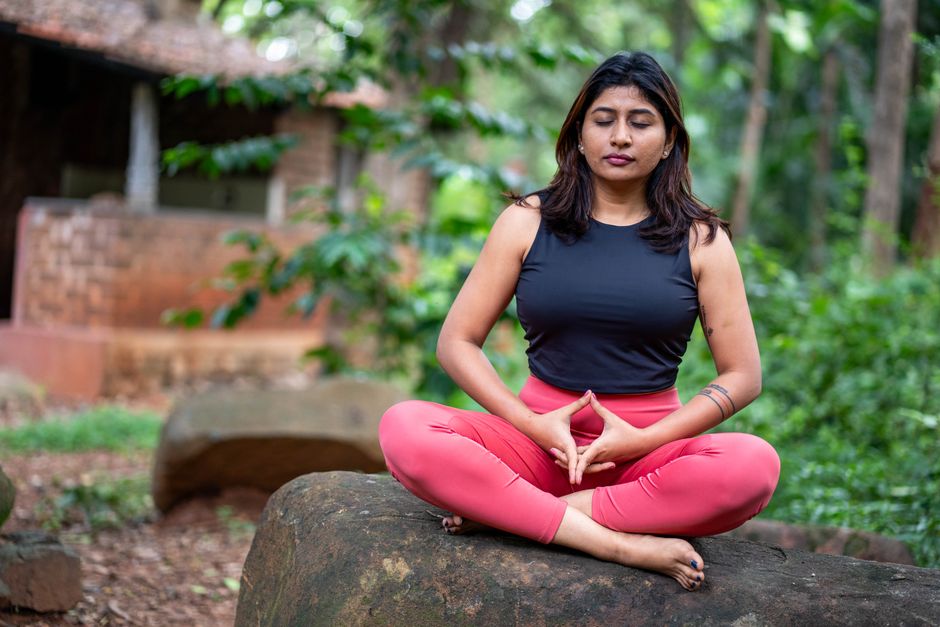
Philadelphia public schools served roughly 203,000 students in the 2025–2026 academic year, and a measurable slice of them spent at least part of their week learning to breathe. Deliberately. The School District of Philadelphia has quietly expanded its partnership with community wellness organizations, embedding mindfulness instruction into daily schedules at more than 40 schools across the city — a number that has nearly doubled since 2022.
The timing matters. Youth mental health data collected by the Philadelphia Department of Public Health through its 2025 Community Health Assessment showed that anxiety and stress-related complaints among students ages 10 to 17 continued to climb post-pandemic, with roughly 34 percent of middle schoolers reporting persistent feelings of worry or nervousness. School counselors have been stretched thin. The district's ratio of counselors to students sits around 1 to 410, well above the American School Counselor Association's recommended ceiling of 1 to 250. Mindfulness programs aren't a replacement for clinical care — and every family navigating serious mental health concerns should connect with a licensed provider — but proponents argue they function as a meaningful first layer of support.
Who's Running the Programs
The most established presence in city schools belongs to Mighty Minds Philadelphia, a nonprofit headquartered on Girard Avenue in Fishtown that has operated school-based programming since 2018. The organization trains classroom teachers in an eight-week curriculum drawn from the evidence-based Mindfulness-Based Stress Reduction framework, originally developed at the University of Massachusetts Medical School in 1979. Mighty Minds currently works inside 22 district schools, with a concentration in North Philadelphia and Kensington, where student need scores — a composite measure of poverty, housing instability, and academic risk — run highest. Their teacher training sessions, offered each August and January at their Girard Avenue office, are free to district staff.
A second program worth knowing is the Calm Classrooms initiative run through the nonprofit Jefferson Center for Integrative Medicine, affiliated with Thomas Jefferson University Hospital on Walnut Street in Center City. Jefferson Center introduced Calm Classrooms to Philadelphia in 2021 as a pilot in four West Philadelphia elementary schools. By the fall 2025 semester, it had expanded to 11 schools, including Lea Elementary in Cobbs Creek and Powel Elementary in West Philadelphia. The curriculum runs five minutes per class session — short enough to slot before morning announcements — and uses guided audio, printed breathing cards, and age-appropriate body-scan exercises developed for grades K through 8.
For families outside the district system, the Kripalu-trained instructors at Philadelphia Mindfulness Center on South Street in Queen Village offer an eight-week youth mindfulness course each semester. The fall 2026 session begins September 9, with tuition set at $195 per child. A sliding-scale option brings the cost down to $75 for families demonstrating financial need.
What the Evidence Actually Says
A 2024 meta-analysis published in the journal School Mental Health examined 61 randomized controlled studies of school-based mindfulness programs across North American and European schools. Researchers found statistically significant reductions in self-reported anxiety scores among students who completed at least six weeks of structured instruction, with effect sizes strongest in students ages 11 to 14. The same analysis noted that teacher fidelity — whether instructors actually delivered the curriculum as designed — was the single biggest predictor of outcome quality, which is why programs like Mighty Minds invest heavily in ongoing coaching rather than one-time training workshops.
For parents who want to get their children involved before September, Mighty Minds hosts free open community sessions every second Saturday at the Kensington Branch of the Free Library of Philadelphia on Torresdale Avenue. The next session runs July 12. Jefferson Center's Calm Classrooms team also publishes a free downloadable starter kit on their website for parents who want to practice at home over the summer. And any family wondering whether a more intensive clinical mindfulness approach might be right for their child should start by calling their pediatrician or reaching out to the Children's Hospital of Philadelphia's Department of Child and Adolescent Psychiatry, which maintains a referral line at its main Civic Center Boulevard campus.